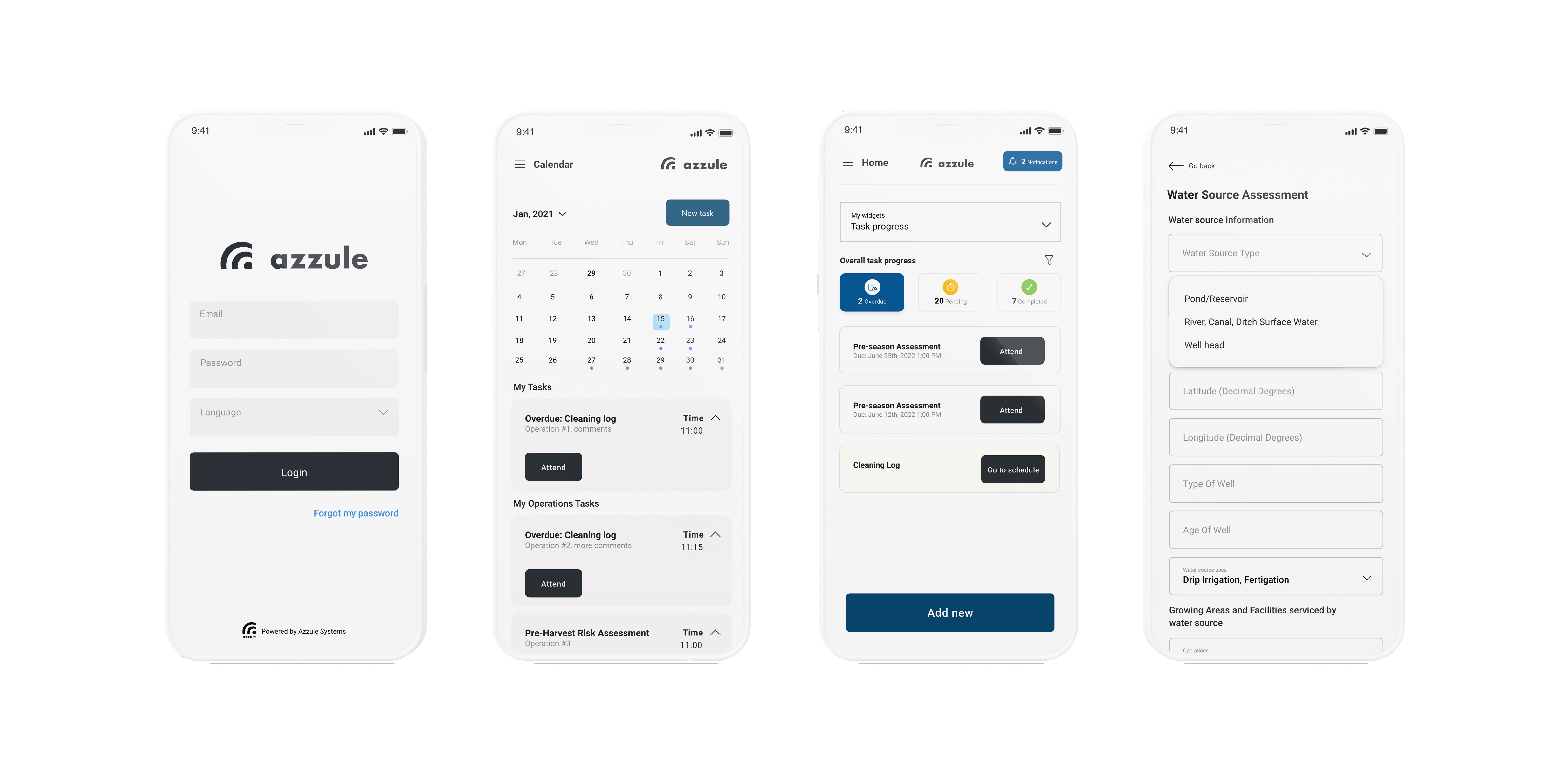
The Azzule App is here! Capture logs and data from your mobile device to build and promote a culture of food safety and operational excellence. The logs available now are only the tip of the iceberg—we have many more logs, features, and updates on the way.
Below, you can explore what’s available now and get a preview of what’s coming soon. Don’t see the log you need? Use the form at the bottom of this page to let us know which logs you’d like to see next.
Streamline compliance with paperless collection of regulatory documentation and seamless electronic access to review and transfer records through the Azzule Platform to all of your supply chain partners.
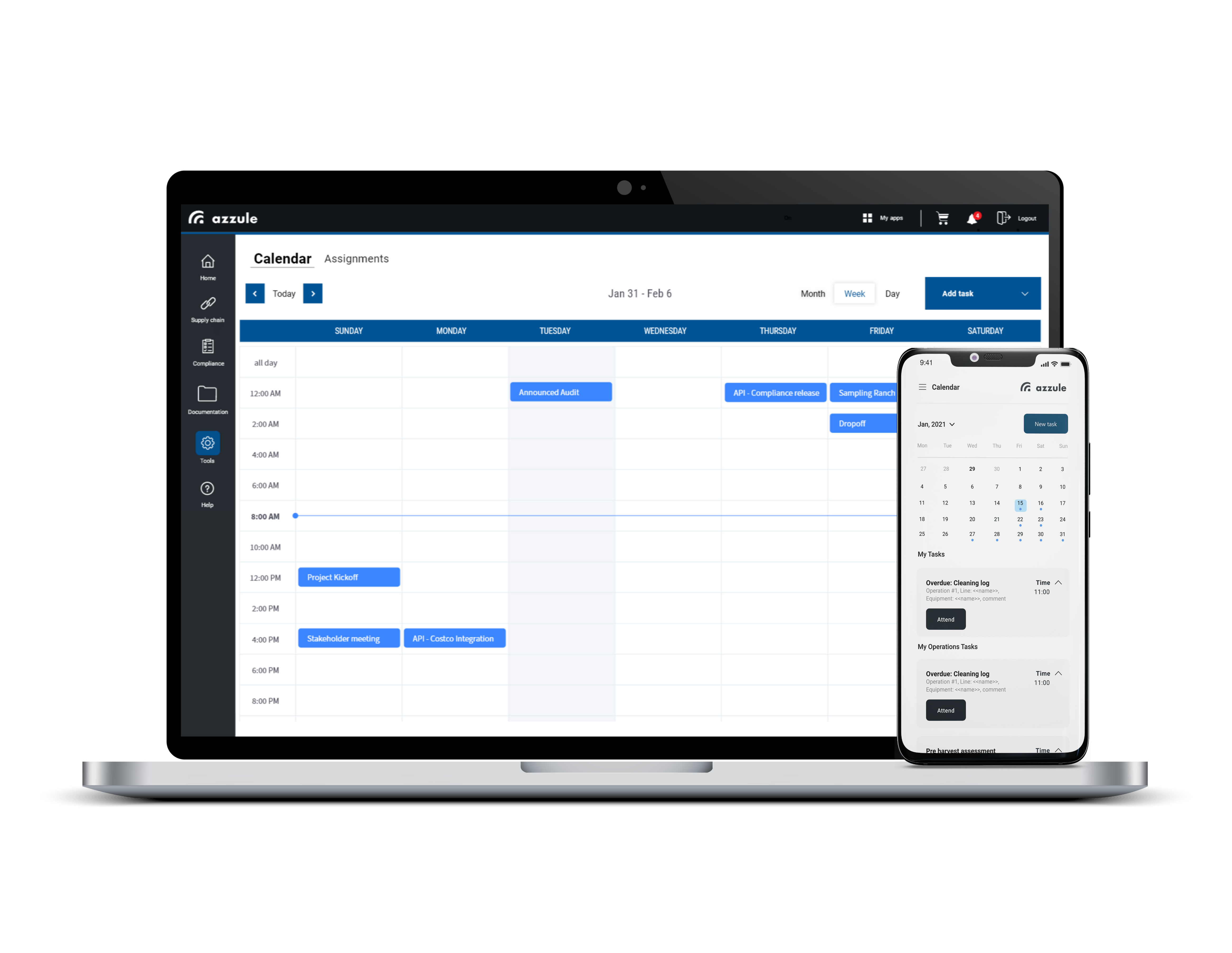
All logs entered in the Azzule App are automatically visible within the Azzule Platform. Review, manage, and transfer records with a few clicks—and unlock advanced analytics to turn your data into decisions.
This log is used to document the cleaning and sanitation of harvest crew water tanks, including washing activities and free chlorine levels. It provides a structured way to record observations and comments.
This log is used to document daily production traceback details, linking harvested products to specific fields, blocks, and crews. It provides a structured way to record observations and trace product origins.
This log is used to document fertilizer applications, including type, nutrient content, method, equipment, and area treated. It provides a structured way to record application details and observations.
This log is used to inspect fields, harvest tools, sanitary facilities, potable water, and employee hygiene before operations begin. It provides a structured way to record observations and conditions in the field and with the harvest crew.
This log is used to document the sanitation of the harvest crew and related equipment, including sanitizer types and concentrations. It provides a structured way to record observations and comments for each sanitation event.
This log is used to document daily harvesting activities, including fields, blocks, products, and harvest crews. It provides a structured way to record observations and other relevant details for each harvest event.
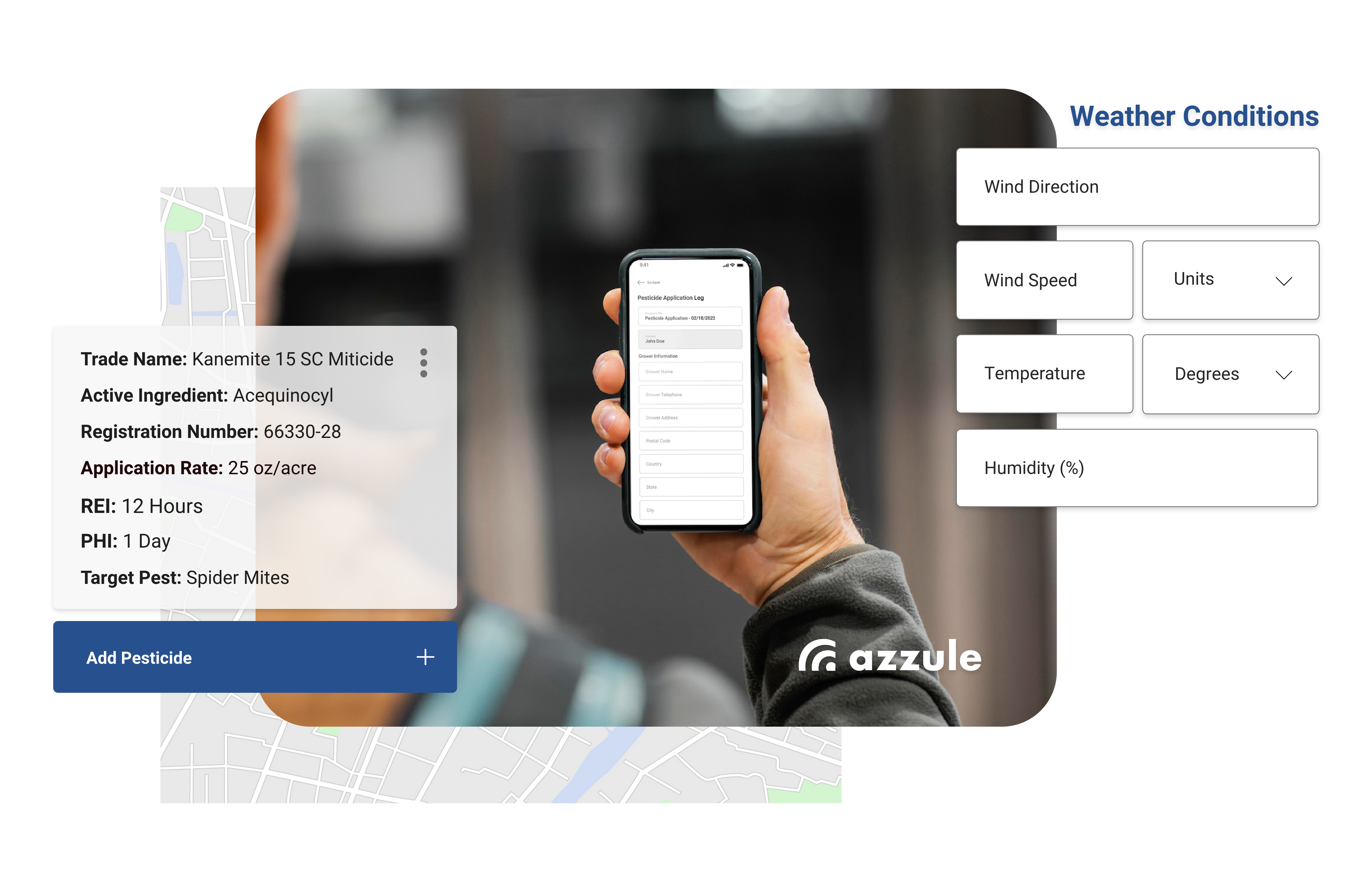
This log is used to record details of pesticide applications in the field. It allows documenting dates, methods, weather conditions, products used, and any observations related to the application.
This log is used to document post-harvest water tests, including sanitizer levels, temperature, pH, and other relevant details related to the water used during post-harvest activities.
This log is used to record observations related to field conditions before harvest, including environmental factors, potential contamination sources, and any other conditions that may affect the crop.
This log is used to record observations about field conditions, inputs, water sources, and surrounding areas before the growing season begins.
This log is used to document inspections of temporary field storage, including packing material, storage conditions, cleanliness, and pest control measures. It allows recording observations and comments for each inspection event.
This log is used to document pre-use inspections of tractors, including operator safety, vehicle condition, and key operational checks. Observations and comments are recorded for each inspection event.
This log is used to document inspections of vehicles used in field operations, including brakes, pneumatics, controls, fluids, lights, and other key components. Observations and comments can be recorded for each inspection event.
This log is used to document observations of water sources, including ponds/reservoirs, rivers/canals/ditches, or well heads. Questions vary depending on the type of water source, and comments can be recorded regarding water quality, potential contamination, and system components.
This log is used to record ATP measurements on surfaces, equipment, or areas. It provides a structured way to document results, compare them with expected thresholds, and note observations or corrective actions.
This log is used to document the calibration of devices or instruments. It provides a structured way to record calibration details, compare expected and obtained results, and note any recalibration or observations.
This log is used to track the receipt, use, and quantities of chemical products stored on-site. It provides a structured way to document inventory details, suppliers, and storage conditions.
This log is used to record temperature readings in cold rooms. It provides a structured way to document maximum and minimum temperatures and note any observations.
This log is used to record the daily cleaning and sanitation of bathrooms and sanitary facilities. It provides a structured way to document chemical concentrations, supply availability, and observations about facility conditions.
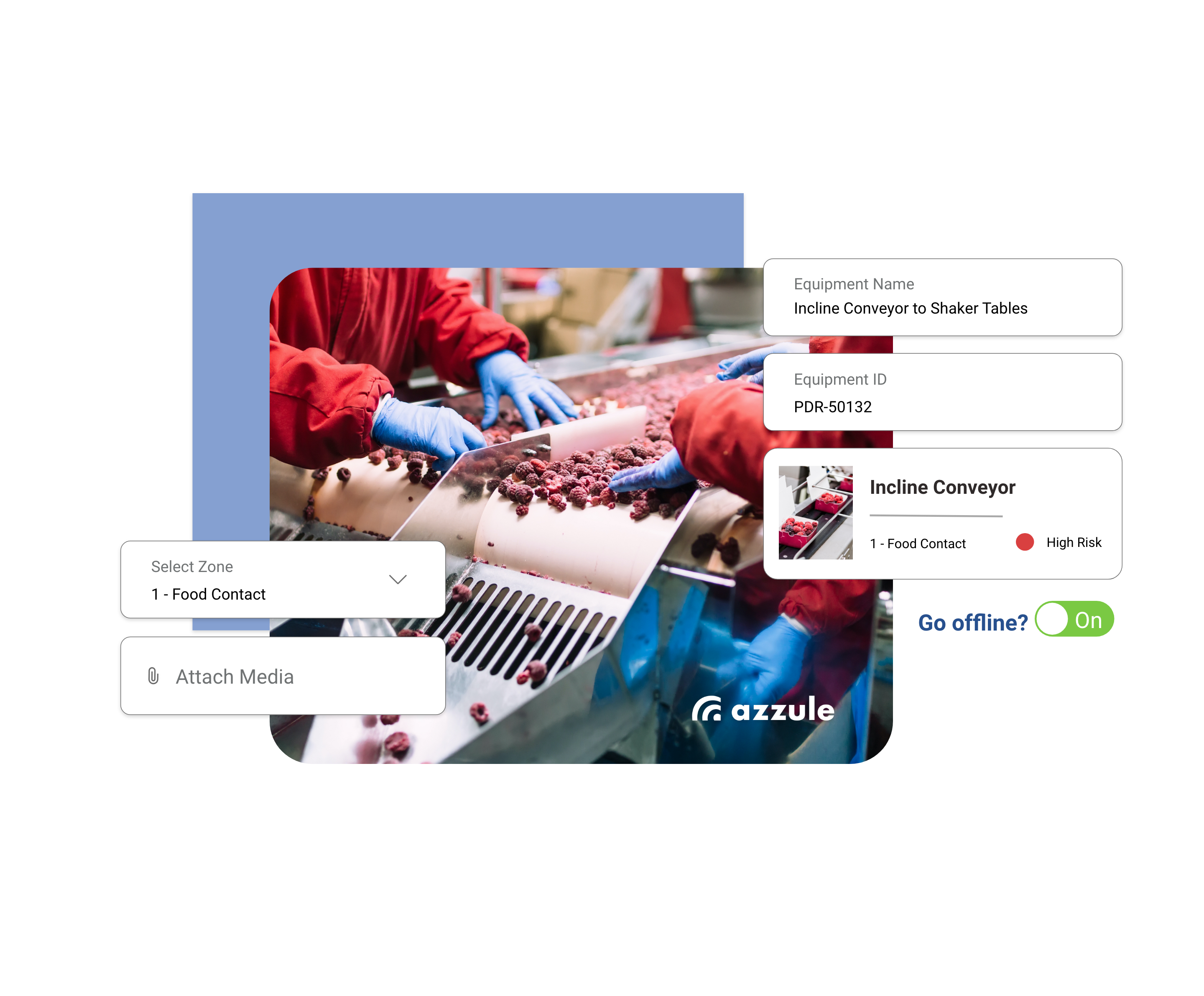
This log is used to document the cleaning and sanitation of facility areas and equipment. It provides a structured way to record surface conditions, chemicals used, sanitation methods, and observations.
This log is used to document the condition of storage, production, shipping areas, and personnel before operations begin. It provides a structured way to record observations regarding cleanliness, equipment, pest control measures, and operational conditions.
This log is used to document inspections of incoming trailers and trucks, including vehicle condition, temperature, cleanliness, and pest observations. It provides a structured way to record inspection details and any relevant comments.
This log is used to record the condition and status of pest control devices during routine checks. It provides a simple way to document device location, functionality, and any observations made during monitoring.
This log represents a first-party sustainability assessment built on Sustainability Standard v1.5, an older audit version no longer active. While version 2.0 is now current and this log does not yet reflect that update, users may still complete it for internal benchmarking or to evaluate their operations against earlier sustainability criteria. For detailed guidance on the questions and scoring approach, please refer to the Sustainability Standard v1.5 audit guidelines .
This log is used to document unusual occurrences, non-conformances, and related observations in operations. It provides a structured way to record details, root causes, preventive measures, and corrective actions as noted by staff.
This log is used to record training sessions for field or facility personnel, including topics covered, attendance, trainer, and any observations or comments.
Need to visit our previous Toolkit library? Access our online Toolkit here.
Request New Logs Today!
*By submitting a request you are opting into marketing communications.